
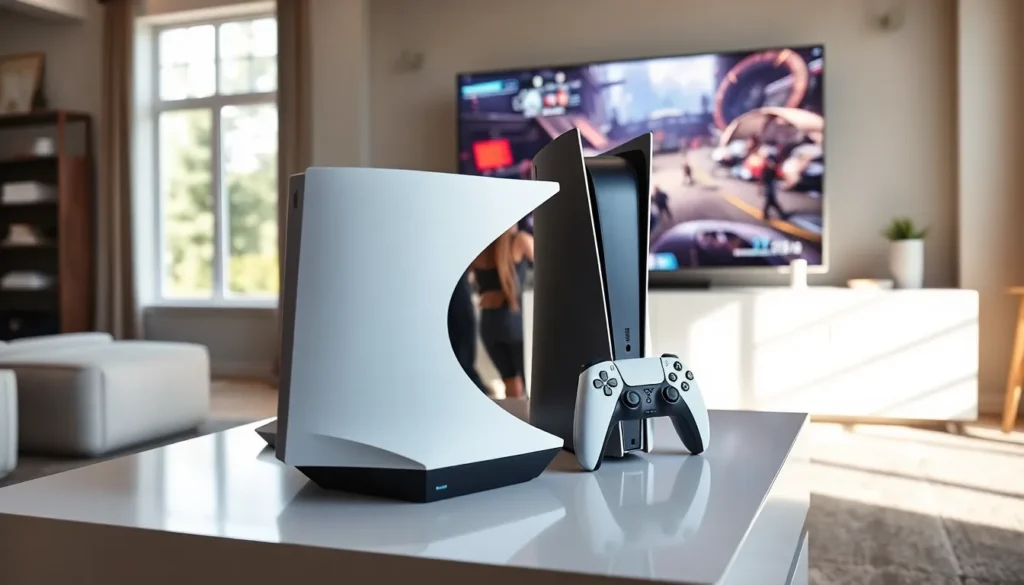

PlayStation is Sony’s flagship gaming brand, and it has shaped the video game industry since 1994. The brand includes home consoles, portable devices, online services, and exclusive games. PlayStation competes directly with Microsoft’s Xbox and Nintendo’s Switch. Over 500 million PlayStation consoles have sold worldwide, making it one of the most successful gaming platforms in history.
This guide explains what PlayStation is, how it started, and what it offers today. Readers will learn about each console generation, key services, and how PlayStation stacks up against competitors.
Table of Contents
ToggleKey Takeaways
- PlayStation is Sony’s flagship gaming brand that has sold over 500 million consoles since launching in 1994.
- Sony has released five PlayStation console generations, with the PS2 remaining the best-selling console ever at 155 million units sold.
- PlayStation Plus offers three subscription tiers with online multiplayer, free monthly games, and access to classic titles for over 47 million subscribers.
- Exclusive games from studios like Naughty Dog and Insomniac Games give PlayStation a competitive edge over Xbox and Nintendo.
- The PS5 features an SSD for faster load times, ray tracing graphics, and the innovative DualSense controller with haptic feedback.
- PlayStation competes with Xbox on performance and exclusives while differentiating from Nintendo’s portable, family-focused approach.
The History of PlayStation
PlayStation began as a failed partnership. Sony and Nintendo worked together in the late 1980s to create a CD-ROM add-on for the Super Nintendo. That deal fell apart in 1991, and Sony decided to build its own console instead.
Ken Kutaragi led the PlayStation project at Sony. He believed CD technology would revolutionize gaming. Sony launched the original PlayStation in Japan on December 3, 1994. The console arrived in North America in September 1995.
The first PlayStation console sold over 102 million units. It introduced 3D gaming to mainstream audiences with titles like Final Fantasy VII, Metal Gear Solid, and Crash Bandicoot. PlayStation also attracted third-party developers who wanted easier tools and lower licensing fees than Nintendo offered.
Sony positioned PlayStation as entertainment for adults, not just kids. This marketing strategy worked. By the late 1990s, PlayStation had become the dominant gaming brand worldwide. The success gave Sony confidence to continue investing in gaming hardware and software.
PlayStation Console Generations
Sony has released five main PlayStation console generations. Each generation brought new technology and expanded the brand’s reach.
PlayStation (PS1)
The original PlayStation launched in 1994. It used CD-ROMs instead of cartridges. This allowed bigger games with better audio and video. The console sold 102.49 million units before Sony discontinued it in 2006.
PlayStation 2 (PS2)
Sony released the PS2 in 2000. It included a DVD player, which helped justify its $299 price tag. The PS2 remains the best-selling console ever made, with over 155 million units sold. Games like Grand Theft Auto: San Andreas and God of War defined this era.
PlayStation 3 (PS3)
The PS3 launched in 2006. It featured a Blu-ray drive and the powerful Cell processor. The high launch price of $599 hurt early sales, but PlayStation recovered. The PS3 eventually sold 87.4 million units. This generation also introduced PlayStation Network for online gaming.
PlayStation 4 (PS4)
Sony launched the PS4 in November 2013. The console focused on games first and avoided the media hub confusion that affected Xbox One’s launch. The PS4 sold over 117 million units. Exclusive titles like The Last of Us Part II, Spider-Man, and God of War earned critical acclaim.
PlayStation 5 (PS5)
The PS5 arrived in November 2020. It features an SSD for faster load times, ray tracing graphics, and the DualSense controller with haptic feedback. Sony offers two versions: a standard model with a disc drive and a Digital Edition without one. The PS5 has sold over 60 million units as of late 2024.
PlayStation Services and Features
PlayStation offers several services beyond hardware. These services add value for players and create recurring revenue for Sony.
PlayStation Network (PSN)
PSN is Sony’s online platform. It connects players for multiplayer gaming, digital purchases, and social features. Users create a PSN ID to access these features. Basic PSN access is free.
PlayStation Plus
PlayStation Plus is a paid subscription service. Members get online multiplayer access, monthly free games, and exclusive discounts. Sony offers three tiers: Essential, Extra, and Premium. The Premium tier includes classic PlayStation games from older consoles. Over 47 million people subscribe to PlayStation Plus.
PlayStation Store
The PlayStation Store sells digital games, add-ons, and movies. Players can buy content directly on their console or through a web browser. Digital sales have grown significantly, now representing most PlayStation game purchases.
Remote Play and Cloud Gaming
PlayStation allows remote play through phones, tablets, and PCs. Players stream games from their console to other devices. PlayStation Plus Premium also includes cloud streaming for select titles. This lets players try games without downloading them first.
Exclusive Games
Sony invests heavily in exclusive titles. Studios like Naughty Dog, Insomniac Games, and Santa Monica Studio create games only available on PlayStation. These exclusives, including Horizon, Uncharted, and Ratchet & Clank, drive console sales and differentiate PlayStation from competitors.
How PlayStation Compares to Other Gaming Platforms
PlayStation competes with Xbox and Nintendo in the console market. Each platform has different strengths.
PlayStation vs. Xbox
Xbox, owned by Microsoft, is PlayStation’s main rival. Both consoles target similar audiences with comparable hardware. The PS5 and Xbox Series X offer similar performance specs. The key difference lies in exclusive games and services.
Xbox Game Pass gives subscribers access to hundreds of games for a monthly fee, including day-one releases. PlayStation Plus offers fewer games in its catalog but arguably stronger exclusive titles. PlayStation has historically outsold Xbox in global markets, especially in Europe and Japan.
PlayStation vs. Nintendo
Nintendo takes a different approach. The Nintendo Switch emphasizes portability and family-friendly games. It does not compete on raw power. PlayStation attracts players who want high-fidelity graphics and mature themes. Nintendo appeals to those who prioritize unique gameplay and iconic franchises like Mario and Zelda.
Many gamers own both a PlayStation console and a Nintendo Switch because the platforms serve different needs.
PC Gaming
PC gaming offers the most flexibility. Players can customize hardware and access multiple storefronts. But, PCs cost more and require technical knowledge. PlayStation provides a simpler experience at a fixed price point. Some PlayStation exclusives now release on PC after their console debut, blurring the line between platforms.


