
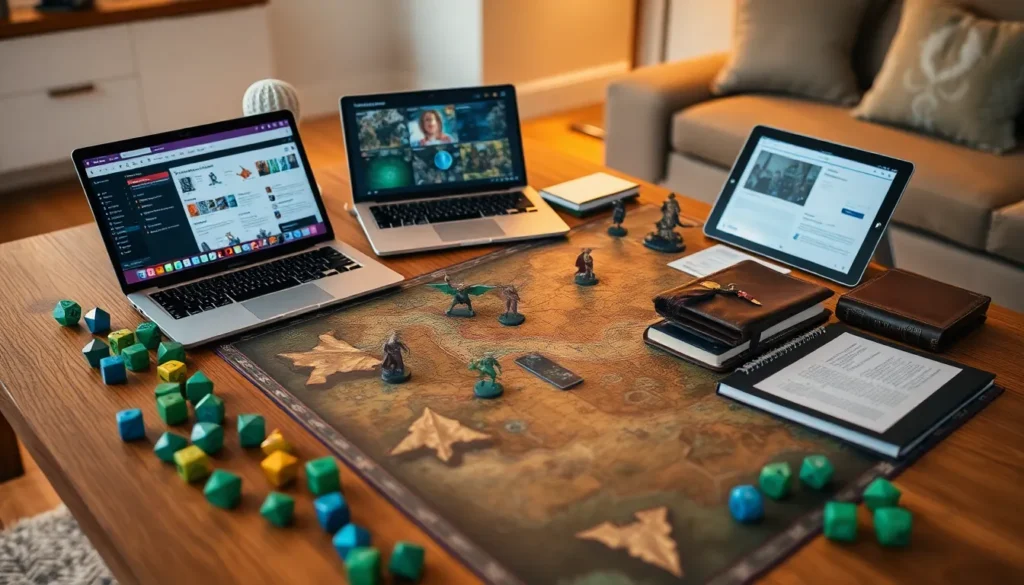

RPG tools have become essential for anyone running or playing tabletop role-playing games. These resources help game masters build immersive worlds, track complex storylines, and manage combat encounters. Players use them to create memorable characters and stay organized during sessions.
The right RPG tools can transform a decent game night into an unforgettable adventure. Whether someone prefers digital apps or classic pen-and-paper methods, the options available today offer something for every play style. This guide covers the best RPG tools for game masters and players, from character generators to virtual tabletops and traditional supplies.
Table of Contents
ToggleKey Takeaways
- RPG tools include both digital apps and traditional items like dice and miniatures, helping game masters and players run smoother, more immersive sessions.
- Character generators like D&D Beyond and Hero Lab save time by automating ability scores, level tracking, and equipment management.
- Virtual tabletops such as Roll20 and Foundry VTT enable remote play with features like map displays, token tracking, and integrated dice rolling.
- Map-making RPG tools like Dungeondraft and Inkarnate let game masters create professional-quality battle maps without artistic skills.
- Choose RPG tools based on your budget, play format (in-person vs. online), game system compatibility, and your group’s technical comfort level.
- Start with free or simple tools and upgrade as your group’s needs grow to avoid overspending on features you won’t use.
What Are RPG Tools?
RPG tools are resources that support tabletop role-playing game sessions. They help with character creation, world-building, encounter management, and gameplay tracking. These tools range from software applications to physical items like dice and reference cards.
Game masters rely on RPG tools to prepare sessions efficiently. A dungeon master running a Dungeons & Dragons campaign might use a random encounter generator, a name generator for NPCs, or a digital initiative tracker. These RPG tools reduce preparation time and allow for more creative focus.
Players benefit from RPG tools as well. Character sheet apps keep stats organized. Spell trackers prevent confusion during combat. Lore databases help players understand game worlds without flipping through rulebooks.
RPG tools fall into two main categories: digital and traditional. Digital RPG tools include websites, mobile apps, and desktop software. Traditional RPG tools include dice sets, miniatures, battle mats, and printed reference materials. Many groups use a combination of both types to create their ideal gaming experience.
Must-Have Digital RPG Tools
Digital RPG tools have changed how people play tabletop games. They offer convenience, automation, and features that physical materials cannot match. Here are the most valuable digital RPG tools available.
Character Generators and Builders
Character generators streamline one of the most time-consuming parts of any RPG. These RPG tools walk users through race selection, class choices, ability score distribution, and equipment purchases. Popular options include D&D Beyond, Hero Lab, and Pathbuilder.
D&D Beyond remains the most widely used character builder for fifth edition Dungeons & Dragons. It calculates modifiers automatically, tracks level progression, and integrates with digital rulebooks. Players can access their characters from any device.
Hero Lab supports multiple game systems, including Pathfinder, Starfinder, and Savage Worlds. This flexibility makes it valuable for groups that play different RPG systems.
Free alternatives exist for budget-conscious players. Websites like Orcpub and RPG tools offered by fan communities provide basic character creation without subscription fees.
Virtual Tabletops and Map Makers
Virtual tabletops (VTTs) allow groups to play together online. These RPG tools display maps, track tokens, manage fog of war, and handle dice rolls. Roll20, Foundry VTT, and Fantasy Grounds lead this category.
Roll20 offers a free tier that works well for casual groups. It includes basic map tools, character sheets, and video chat integration. The marketplace provides pre-made adventures and assets.
Foundry VTT requires a one-time purchase but offers extensive customization. Its module system lets users add features through community-created plugins. Tech-savvy game masters often prefer this option.
Map-making RPG tools deserve special mention. Dungeondraft and Inkarnate help game masters create professional-quality battle maps without artistic skill. These programs use asset libraries and intuitive interfaces to produce impressive results quickly.
Traditional Tools Every RPG Player Needs
Digital solutions work well, but traditional RPG tools remain important. Physical items create tactile experiences that screens cannot replicate. They also function without batteries or internet connections.
Dice represent the most fundamental RPG tools. A standard polyhedral set includes d4, d6, d8, d10, d12, and d20 dice. Most players own multiple sets in different colors. Quality dice from manufacturers like Chessex and Q-Workshop roll fairly and last for years.
Miniatures bring combat encounters to life. Painted figures representing player characters make battles more engaging. Pre-painted options from WizKids reduce the barrier to entry for those who don’t paint.
Battle mats and terrain pieces provide visual context for encounters. Dry-erase mats allow game masters to draw maps quickly. 3D terrain from companies like Dwarven Forge creates impressive setups for important battles.
Physical reference materials still serve important purposes. Screen-printed GM screens hide notes while displaying common rules. Spell cards let players track abilities without searching through books. Initiative trackers that clip onto GM screens keep combat organized.
Note-taking supplies round out the traditional RPG tools category. Many players prefer physical journals for character backstories and session notes. Graph paper helps with mapping dungeons during exploration.
How to Choose the Right RPG Tools for Your Campaign
Selecting RPG tools depends on several factors. Game masters and players should consider their specific needs before investing time or money.
Budget matters significantly. Free RPG tools like Roll20’s basic tier and community-created generators work well for new groups. Premium options offer more features but require ongoing subscriptions or upfront purchases. Groups should start simple and upgrade as needed.
Play format influences tool selection. In-person groups benefit from physical RPG tools like dice and miniatures. Remote groups need virtual tabletops and digital character sheets. Hybrid groups that mix online and in-person play may need both types.
Game system compatibility determines which RPG tools work for specific campaigns. D&D Beyond only supports Dungeons & Dragons. Hero Lab covers multiple systems. Game masters should verify compatibility before committing to any platform.
Technical comfort levels affect adoption. Some RPG tools require significant setup time and technical knowledge. Others work immediately with minimal configuration. Groups with less tech experience should choose simpler options.
The size of the gaming group also plays a role. Larger parties benefit from RPG tools that automate tracking and calculations. Smaller groups may find simple solutions sufficient.
Game masters should ask their players about preferences. Some players enjoy using apps during sessions. Others find screens distracting and prefer paper character sheets. The best RPG tools are ones the entire group will actually use.


